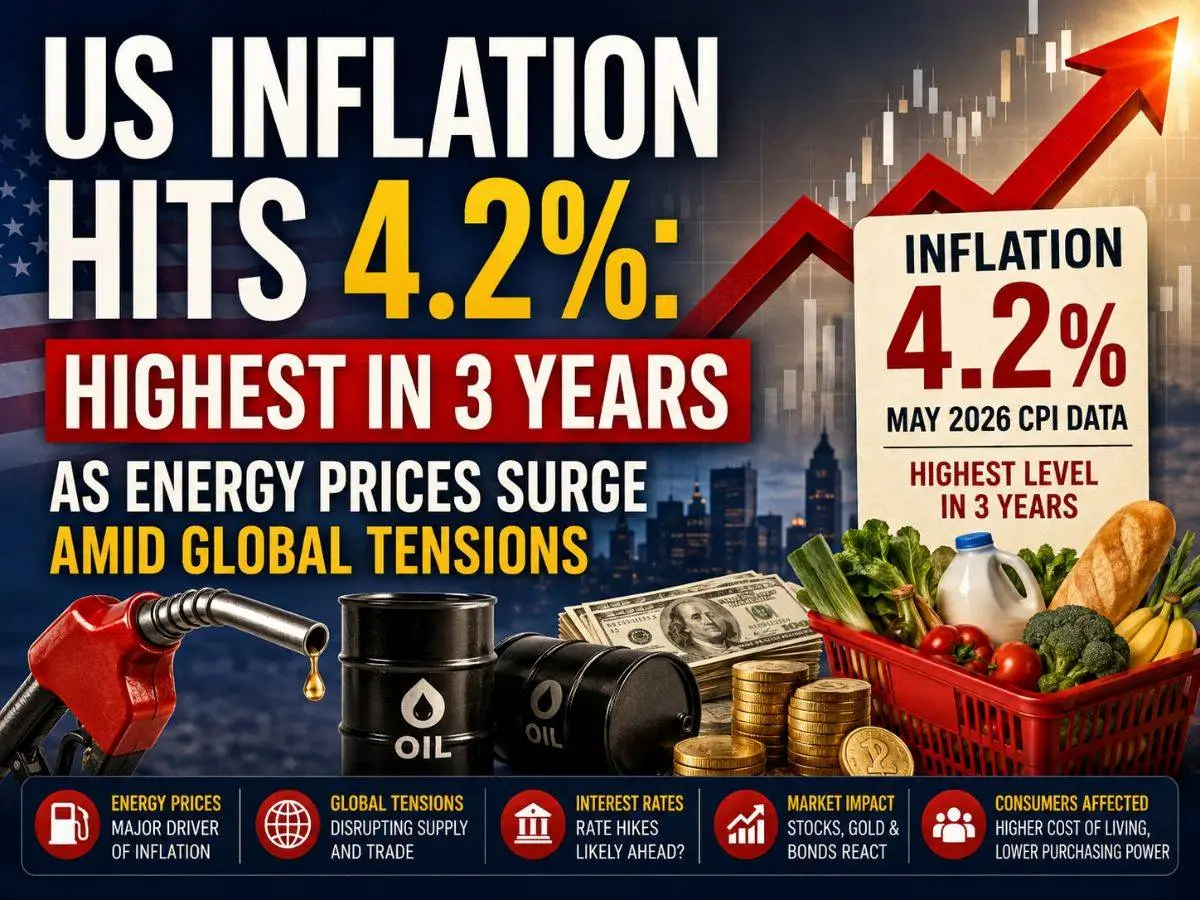
US Inflation: Recent reports on inflation in the United States have created havoc for international trading partners, causing prices to increase dramatically at a 4.2% annualised rate as of May of 2026. This is the largest annualised increase in three years. It has many economists, policymakers and consumers wondering how much of an effect this will have on their lives.
The current increase in inflation not only impacts the price of goods sold every day but also how the Federal Reserve will set interest rates, stock prices, and the stability of the global economy. Here’s a full breakdown of what is happening, why this is important, and what might happen next.
What Is Inflation and Why It Matters
Inflation refers to the rate at which the general level of prices for goods and services rises over time. When inflation increases:
- Purchasing power decreases
- Cost of living rises
- Savings lose value
- Borrowing costs may increase
A moderate level of inflation is considered healthy for economic growth, but a sharp rise like the current 4.2% can create uncertainty and financial pressure.
US Inflation Data May 2026
- Current Inflation Rate: 4.2%
- Previous Month: Lower than current spike
- Highest Level Since: 3 years
- Major Driver: Energy prices (fuel, oil, gas)
- Additional Factors: Global tensions, supply disruptions
The latest Consumer Price Index (CPI) data shows a clear upward trend, indicating persistent inflationary pressure.
What Is Driving the Inflation Surge?
1. Rising Energy Prices
Energy costs are the biggest contributor to the current inflation surge. Oil prices have increased due to:
- Global supply constraints
- Increased demand
- Ongoing geopolitical tensions
Higher fuel prices directly impact transportation, production, and logistics, leading to widespread price increases.
2. Geopolitical Tensions
Recent global conflicts and instability have disrupted supply chains, particularly in:
- Oil and gas supply routes
- Trade and shipping networks
This has resulted in higher costs for businesses, which are ultimately passed on to consumers.
3. Strong Consumer Demand
Post-pandemic recovery and steady employment levels have boosted consumer spending. While this is positive for economic growth, it can also:
- Increase demand for goods
- Push prices higher
4. Supply Chain Disruptions
Global supply chains are still adjusting to disruptions, leading to:
- Delays in goods delivery
- Increased production costs
- Limited supply in certain sectors
Impact on Consumers and Daily Life
Rising Cost of Living
Consumers are already feeling the impact through:
- Higher fuel prices
- Increased grocery bills
- Rising utility costs
Reduced Purchasing Power
With prices increasing faster than wages, households may struggle to maintain their standard of living.
Impact on Financial Markets
Stock Market Reaction
Inflation often leads to market volatility. Investors react to:
- Interest rate expectations
- Corporate earnings pressure
Gold Prices
Gold is traditionally seen as a hedge against inflation. However:
- Short-term fluctuations occur based on market sentiment
- Inflation data influences gold demand
Bond Yields
Rising inflation typically leads to:
- Higher bond yields
- Increased borrowing costs
What Does This Mean for Interest Rates?
The Federal Reserve closely monitors inflation data to decide monetary policy. With inflation at a 3-year high:
- Rate hikes may be considered
- Borrowing costs (loans, EMIs) could rise
- Credit card interest rates may increase
The Fed’s next move will be crucial in controlling inflation without slowing economic growth too much.
Global Impact of US Inflation
The US economy plays a major role globally, so rising inflation can:
- Affect global markets
- Impact emerging economies
- Influence currency exchange rates
Countries dependent on US trade or currency flows may experience ripple effects.
Inflation vs Gold, Stocks and Crypto
Gold
- Seen as a safe investment
- Demand increases during inflation
Stocks
- Growth stocks may suffer
- Defensive sectors perform better
Cryptocurrency
- Mixed reaction
- Sometimes viewed as an alternative asset
What Should Consumers Do Now?
Budget Planning
- Track expenses carefully
- Prioritize essential spending
Smart Investments
- Diversify portfolio
- Consider inflation-resistant assets
Debt Management
- Avoid high-interest loans
- Pay off existing debts faster
Future Outlook: Will Inflation Continue to Rise?
The future of inflation depends on several factors:
- Global geopolitical stability
- Energy market trends
- Federal Reserve policies
Possible Scenarios:
- Inflation Stabilizes: If energy prices fall
- Further Increase: If tensions continue
- Gradual Decline: With policy intervention
FAQs:
- What is the current US inflation rate?
- It is currently at 4.2%, the highest in three years.
- Why is inflation rising in 2026?
- Main reasons include energy prices, global tensions, and supply disruptions.
- How does inflation affect daily life?
- It increases the cost of living and reduces purchasing power.
- Will interest rates increase?
- There is a strong possibility if inflation remains high.
- Is inflation good or bad?
- Moderate inflation is good, but high inflation can harm the economy.
A major economic development is the increase of American inflation to 4.2%. This inflationary spike is driven by growing energy prices as well as global tensions; it will have significant effects on each of the three major groups of individuals who make up our economy; consumers, investors and policy makers.
Inflation is a part of the natural ebb and flow of our economy. However, the current rate of inflation presents several potential complications for consumers, investors and policy makers, such as rising cost of living, interest rates and financial instability. As the situation continues to develop and change, it will be important for consumers, investors and policy makers to remain informed as well as to make prudent, sound financial decisions.
Also Read:
More in Business
 BusinessUPI Charges 2026: What Changes Above ₹2,000 From October 15? 0.4% MDR, Who Pays and Full Rules Explained15 Sep 2026
 BusinessBRICS Summit 2026 Delhi: New Delhi Declaration, Key Decisions & India Impact12 Sep 2026
 BusinessWho Is Tengku Puteri Ilyana Alia? Meet the Malaysian Princess Who Married British Racer Chris Froggatt13 Aug 2026
 BreakingNational Handloom Day 2026: Date, Theme, History, Significance and Why India Celebrates Its Weaving Heritage6 Aug 2026
 BusinessITR Filing Last Date 2026: Deadline, Late Fee, Penalties & Filing Guide for AY 2026-2729 Jul 2026
 BusinessNew IRCTC Website Beta Version Live Today: Features, Login Process and Booking Guide15 Jul 2026
Read Next
 SportsAsian Games 2026 Live: India and Pakistan Schedule, Results, Medal Tally, Cricket, Hockey and Latest Updates20 Sep 2026
 EntertainmentMunmun Dutta Shares Empty Taarak Mehta Ka Ooltah Chashmah Set: ‘Looks Haunted’ When Nobody Is Shooting19 Sep 2026
 EntertainmentBhuvan Bam on India’s Got Latent Season 2 Episode 7: Panel, Samay Raina Show & What Happened18 Sep 2026