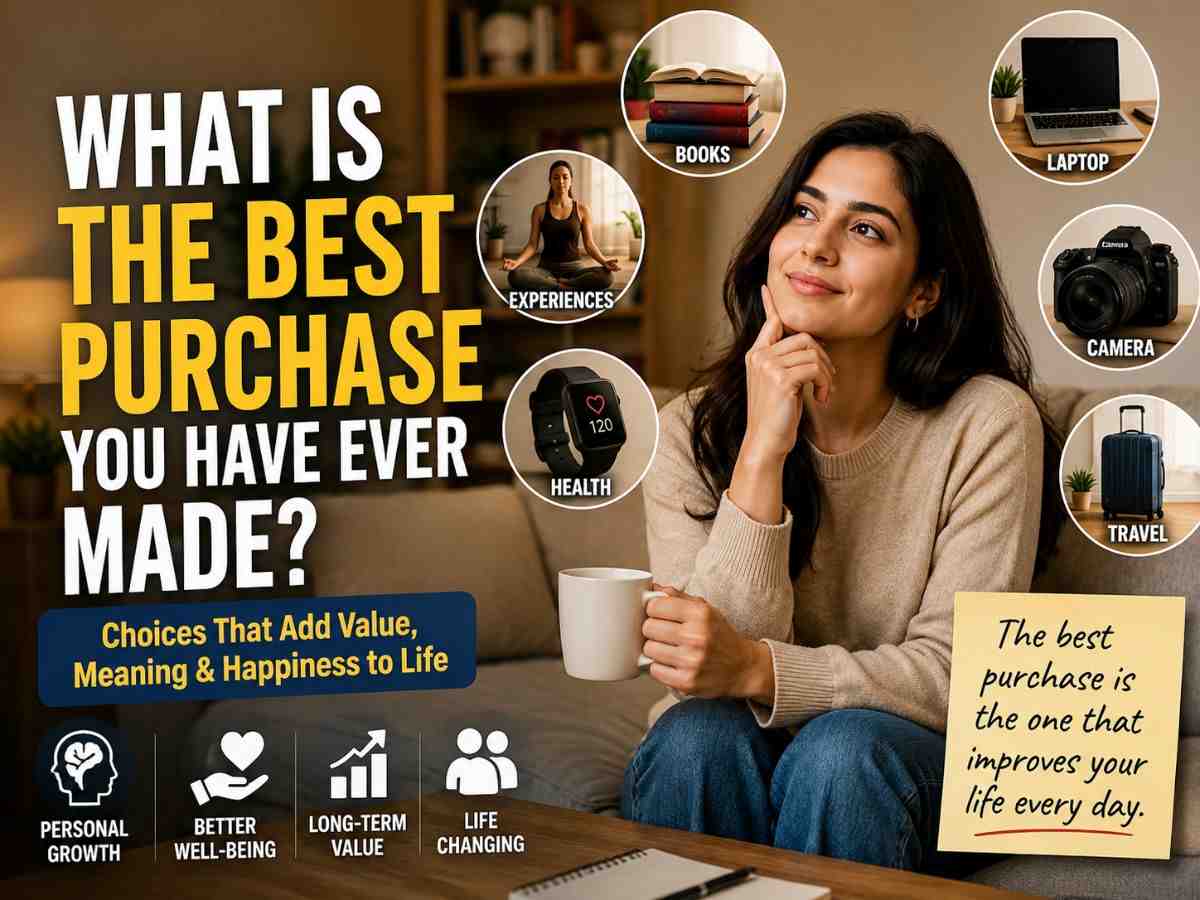
The best purchase isn’t necessarily the priciest, but the one that delivers outstanding value, durability, and satisfaction over time. Whether it’s a gadget, a home appliance, an educational course, or a once-in-a-lifetime trip, the smartest buys share common traits: they meet a real need, last a long time, and bring joy or improvement to your life. In this guide, we explain how to identify that perfect purchase. We draw on expert reports and research – from Consumer Reports durability data to academic studies on happiness – and illustrate with real-world examples across categories like tech, home, travel, education, and health. You’ll also find a handy checklist of decision factors and “red flags” to avoid. By focusing on value, longevity, utility, emotional impact, and even sustainability, you can turn your spending into smart, satisfying investments.
The “Best Purchase”
A best purchase delivers far more than a quick thrill. It provides long-term value and quality. Key factors include:
- Value for Money – You get solid performance or benefit per dollar. A good benchmark is cost vs. benefit over time, not just upfront price.
- Longevity & Durability – High-quality materials and strong craftsmanship mean the item lasts. For example, a well-made appliance or piece of furniture may serve you for a decade or more. Unfortunately, many products fail early: Consumer Reports found roughly 31% of new refrigerators with ice-makers broke down by year five. Checking brands and reliability scores (e.g. Which? Best Buys or Consumer Reports ratings) can help you pick durable items.
- Utility & Frequency of Use – The more you use something, the more value you get. A laptop or power tool that you rely on daily can justify a higher cost than a specialty gadget you rarely use. Think about how often the purchase will solve a problem or make life easier.
- Emotional Impact & Experience – Many studies show that spending on experiences (travel, hobbies, family outings) yields lasting happiness. Research from the University of Texas found people reported significantly more moment-to-moment happiness from experiential purchases (vacations, concerts, dining out) than from material goods. Experiences also become cherished memories.
- Sustainability & Ethics – A best purchase can also be one that aligns with your values. Choosing energy-efficient appliances or products with repairable designs can save money (e.g. lower energy bills) and reduce environmental impact. In the long run, “buying once, owning for life” can be kinder to the planet and your wallet.
In sum, a “best purchase” strikes a balance between practical benefits (functionality, savings) and personal satisfaction (happiness, peace of mind). It may even be something you once resisted but later found invaluable. Financial experts often note that the highest return on investment (ROI) comes from purchases that reduce stress or open opportunities – like paying off debt or investing in health and skills. As Morgan Housel’s work suggests, the best purchase might simply be “peace of mind.”
Checklist for a Great Purchase: Before buying, ask: Do I really need this? Will I use it often? How long will it last? We’ll expand on these decision factors in the practical guidance section below.
Real-Life Examples
Here are a few illustrative examples of “best purchases” across different categories. Each case shows the cost, benefits, lifespan, and why users were delighted with them.
- Tech/Gadgets – Laptop or Smartphone: Suppose you spent $1,200 on a high-quality laptop. If it serves you reliably for 5-6 years, that’s only $200 per year for a key work-and-entertainment tool. In fact, research shows that most U.S. smartphones are replaced after ~2.5 years, so holding onto a device longer greatly multiplies its value. Many users say the best tech buys are those that age well (a flagship phone or laptop with good support) – you avoid frequent replacement costs. One consumer found her 2017 MacBook Pro is still “easily the best purchase I’ve ever made,” as it runs strong year after year. The benefits: daily productivity, connectivity, and even residual trade-in value after years of use.
- Home – Major Appliance or Furniture: A $1,500 refrigerator or $1,000-quality mattress can feel expensive upfront, but these purchases last a decade or more if chosen wisely. For example, a well-reviewed fridge might keep running strong for 12+ years with minimal repairs, compared to cheaper brands that need replacing in 5–7 years. Consumer Reports notes nearly half of new refrigerators eventually report problems – so picking a reliable brand (e.g. based on CR’s ratings) is crucial. In practice, a family friend still uses a 2015 French-door fridge (cost ~$2,000) with no issues. It provides daily convenience and energy savings (as newer models often do) for many years. Similarly, a good mattress or couch may cost more at first but yields comfortable sleep and durability, making each night’s rest a “best purchase” in hindsight.
- Travel & Experiences – Family Vacation or Learning Trip: People often call a memorable trip their best purchase. Consider spending $4,000 on a family vacation. While that seems like a lot, the payoff in well-being is high. Studies show that just planning or having a trip booked can boost happiness. During travel, individuals experience stress reduction and stronger bonds. Unlike gadgets that depreciate, the memories and personal growth from travel last a lifetime. For instance, an extended trip abroad at age 30 might cost the same as a used car, but yields intangible returns: broader perspectives, new friendships, and lasting satisfaction.
- Education/Career – Course or Workshop: Investing in yourself can be the best purchase. Paying, say, $600 for an online course or certification might seem steep, but if it leads to a new skill, promotion, or raises income by far more than the cost, the ROI is huge. For example, one professional spent $1,000 on a coding bootcamp and landed a job paying $10,000 more per year. They consider it their “best purchase” because the skill (and confidence) gained paid off many times over. Even non-career education, like a creative writing class or language course, can enrich life and open new opportunities, making the cost worthwhile in personal fulfillment.
- Health/Fitness – Bike or Gym Membership: Finally, health-related purchases often top “best buys” lists. If you spend $500 on a quality bicycle or $40/month on a gym membership, the benefits can be huge. Regular exercise improves mood, sleep, and longevity. Research confirms that 150 minutes of moderate exercise weekly can add about 7 years of life expectancy. One cyclist reports “best purchase ever” after a $700 hybrid bike that now saves money on commute fares, improves fitness, and sparks adventure. Similarly, a sturdy pair of running shoes (even at $120) that you use daily for years delivers excellent value in health benefits.
Each of these examples shows a purchase that paid off through ongoing use, satisfaction, and often savings. In contrast, a trendy gadget or impulse buy that sits unused is unlikely to be called “best.”
Checklist: Choosing Your Best Purchase
When eyeing any major purchase, follow these steps to help it become the best purchase you ever made:
- Define Your Need: What specific problem will this solve? (e.g. a laptop for work, a blender for healthy meals, a trip for family bonding). Avoid buying vague “maybe I’ll use this.”
- Research Quality & Durability: Read expert reviews (Consumer Reports, wirecutter, Which?) and customer feedback. Look for reliability ratings or longevity tests. For appliances, check failure rates; for tech, check support/lifespan. For example, learned from survey data that automakers are generally trusted for durability by ~50% of consumers, but only ~40% trust phone-makers to make long-lasting devices.
- Consider Total Cost of Ownership: Don’t focus only on sticker price. Factor in operating costs, maintenance, and lifespan. An energy-efficient fridge might cost more now but save on electricity over 15 years. A cheap router that dies in 2 years can be more expensive than a pricier model that lasts 5 years.
- Check Warranty and Support: Good products often come with decent warranties or customer service. A longer warranty suggests the manufacturer expects the product to last.
- Assess Frequency of Use: Will you really use it? Items you use every day (smartphone, shoes, coffee maker) can justify a higher upfront cost. Rarely-used items should be budget-friendly or rented if possible.
- Value Intangibles: Ask yourself if the purchase will make you happier or healthier. Spending on experiences or health often has less tangible ROI, but studies show it yields lasting satisfaction. If it improves your life (e.g. stress-free travel, better fitness), that’s valuable.
- Sustainability & Ethics (Optional): If it matters to you, consider eco-friendly options. For instance, buying a durable tool or a refurbished device reduces waste and may save money. It can also avoid future regrets if regulations change (e.g. energy efficiency standards).
Red Flags to Avoid: Be wary of deals that seem too good: extremely cheap items often skimp on quality and can fail fast. Avoid excessive features you don’t need (the “gotta keep up with the Joneses” trap). Check return policies and avoid complex one-time payments without try-before-you-buy. Finally, impulse buying is a common pitfall – whenever possible, sleep on a big purchase or use a short waiting period to ensure it’s not just a passing whim.
Comparing Purchase Types
Below is a quick comparison of three broad purchase categories. While costs and lifespans vary by brand and usage, this table gives a general sense of what to expect for a “best purchase” in each category:
| Category (Example) | Cost Range (USD) | Expected Lifespan | Primary Benefit |
|---|---|---|---|
| Tech/Gadget (Laptop/Phone) | $500 – $2,000 | 3 – 5+ years (smartphone), 5 – 7 years (laptop) | Productivity, Connectivity, Entertainment |
| Home Appliance (Refrigerator, Washer) | $800 – $2,500 | 10 – 15+ years (if reliable model) | Convenience, Efficiency, Comfort |
| Experiences (Travel, Events) | $1,000 – $5,000+ | Memories last a lifetime | Happiness, Personal Growth, Memories |
Note: Actual prices and lifespans vary by model and usage. These examples use USD ranges for illustration. In any region, higher-end models often cost more but may last significantly longer, yielding better value over time. Always adjust for local context (warranty terms, service availability, sales tax).
The “best purchase” is highly personal – it depends on your lifestyle and values. But by following the principles above, you can tilt the odds toward satisfying, high-value buys. Remember: the best purchase is one that enriches your life, for years to come. Focus on quality, true needs, and long-term happiness rather than short-term deals. If in doubt, take time, read trusted reviews, and consider both practical factors and the joy factor. With careful planning, your next big purchase can become a shining example of smart spending.
Also Read: What App Eats Up Most of Your Screen Time – And Do You Even Feel Bad About It?
More in Entertainment
 EntertainmentMunmun Dutta Shares Empty Taarak Mehta Ka Ooltah Chashmah Set: ‘Looks Haunted’ When Nobody Is Shooting19 Sep 2026
 EntertainmentBhuvan Bam on India’s Got Latent Season 2 Episode 7: Panel, Samay Raina Show & What Happened18 Sep 2026
 EntertainmentAnant Nag to Receive Dadasaheb Phalke Award 2024: Age, Movies, Wife, Family, Career and Kannada Cinema Legacy16 Sep 2026
 EntertainmentAjaz Khan Controversy: Woman Shares Alleged ‘Coffee or Wine’ Messages14 Sep 2026
 EntertainmentMumbai Cha Raja 2026 First Look: Aagman Date, Theme, Darshan, Location and What to Know13 Sep 2026
 EntertainmentLalbaugcha Raja 2026 First Look: Date, Theme, Aagman & Darshan11 Sep 2026
Read Next
 SportsAbhishek Sharma Hits Fastest T20I Century: 30-Ball Hundred Breaks Rohit Sharma’s Record17 Sep 2026
 BusinessUPI Charges 2026: What Changes Above ₹2,000 From October 15? 0.4% MDR, Who Pays and Full Rules Explained15 Sep 2026
 BusinessBRICS Summit 2026 Delhi: New Delhi Declaration, Key Decisions & India Impact12 Sep 2026