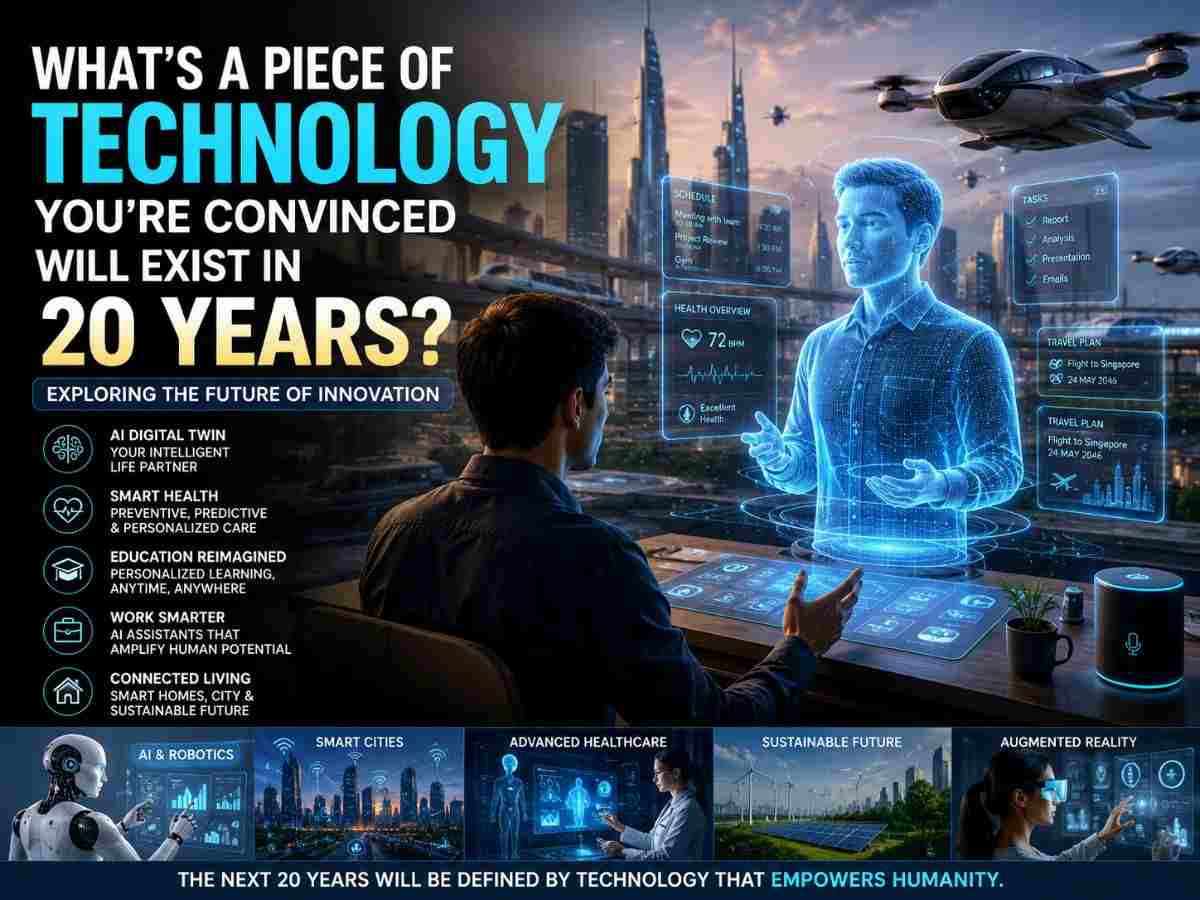
Technology has transformed our lives at an incredible pace over the past few decades. Just 20 years ago, smartphones, artificial intelligence, and self-driving cars seemed like science fiction. Today, AI writes articles, translates languages instantly, assists doctors, and even helps create software. Looking ahead another 20 years, one technology I believe will become a reality is the AI-powered personal digital twin—a highly intelligent virtual version of yourself that understands your habits, preferences, knowledge, and goals.
Unlike today’s virtual assistants, this digital twin would not simply answer questions or set reminders. It would think alongside you, manage complex tasks, and continuously learn from your experiences. It could become one of the most valuable technologies of the future, transforming how people work, learn, communicate, and make decisions.
What Is an AI Digital Twin?
An AI digital twin is a personalized artificial intelligence model built around an individual. It would securely learn from your emails, documents, calendars, notes, conversations, and work history to understand how you think and operate.
Imagine having an intelligent assistant that knows your writing style, remembers important meetings, understands your long-term goals, and can handle repetitive work without constant supervision. Rather than replacing human intelligence, it would amplify it by acting as a trusted digital partner.
How It Could Change Daily Life
Twenty years from now, a digital twin could help manage almost every aspect of everyday life.
Before you wake up, it could analyze your schedule, prioritize tasks, summarize overnight news, and prepare responses to emails. During the workday, it might draft presentations, organize meetings, conduct research, and even negotiate appointments on your behalf.
Instead of spending hours searching for information, your digital twin could instantly retrieve relevant documents, explain complex topics, and recommend the best course of action based on your past decisions.
For families, it could manage household budgets, plan vacations, monitor home security systems, and coordinate schedules among family members.
A Revolution in Healthcare
Healthcare is another area where AI digital twins could make a remarkable difference.
Your personal AI could continuously monitor data from wearable devices, medical records, and health sensors. It might detect early signs of illness long before symptoms appear and recommend preventive care.
Doctors could use a patient’s digital twin to simulate treatments and predict how different medications might affect them. This personalized approach could improve diagnoses, reduce medical errors, and help people maintain healthier lifestyles.
Transforming Education
Education could become more personalized than ever before.
Every student learns differently, but today’s classrooms often follow a standard approach. An AI digital twin could identify individual strengths and weaknesses, adapt lessons to different learning styles, and provide one-on-one tutoring at any time of day.
Students could practice languages with realistic AI conversations, receive instant feedback on assignments, and explore complex subjects through interactive simulations tailored to their learning pace.
The Future Workplace
The workplace of 2046 may look dramatically different.
Rather than replacing employees, AI digital twins could handle repetitive administrative work, allowing people to focus on creativity, leadership, and problem-solving.
Professionals such as lawyers, engineers, doctors, marketers, and journalists could use digital twins to analyze data, prepare reports, summarize research, and collaborate more efficiently.
Businesses may even assign teams of AI assistants to work alongside human employees, increasing productivity without sacrificing human decision-making.
Ethical and Privacy Challenges
As exciting as this technology sounds, it would also raise important ethical questions.
A digital twin would have access to highly personal information, making privacy and cybersecurity essential. Companies developing these systems would need strong safeguards to ensure that users maintain full control over their data.
Governments would likely introduce new regulations covering AI transparency, digital identity, and responsible data use. Building public trust will be just as important as developing the technology itself.
Is This Future Realistic?
Many of the building blocks already exist today.
Artificial intelligence can summarize documents, write code, recognize speech, translate languages, and generate images. Wearable devices monitor heart rate and sleep, while cloud computing stores vast amounts of personal data securely.
As AI models become more capable and computing power continues to grow, combining these technologies into a highly personalized digital twin seems like a natural evolution rather than an impossible dream.
The Human Element Will Still Matter
Even with advanced AI, human qualities such as empathy, creativity, intuition, and emotional intelligence will remain irreplaceable.
A digital twin should be viewed as a partner rather than a replacement. It can process information faster than humans, but meaningful relationships, ethical decisions, and original ideas will always depend on people.
The most successful societies will likely be those that combine human creativity with artificial intelligence in responsible and balanced ways.
More in Tech
 TechNew Bajaj Pulsar 125 Launched in India: Price, Features, Engine, Mileage, Variants and What’s New24 Aug 2026
 TechSpace in India: How ISRO, Startups and New Missions Are Changing the Future of Space Exploration23 Aug 2026
 TechGitHub Down: Copilot, Actions and API Hit by Worldwide Outage — Live Updates17 Aug 2026
 BreakingRoyal Enfield Himalayan 440 Launch Confirmed for September 4: Price, Engine and Everything We Know14 Aug 2026
 TechMotorola Edge 70 Neo Leaks Reveal New Color Options, Design Changes and 200MP Camera Ahead of Launch9 Aug 2026
 TechApple iPhone 17 Pro vs iPhone 18: Is the Latest Price Drop the Right Time to Upgrade?7 Aug 2026
Read Next
 EntertainmentMunmun Dutta Shares Empty Taarak Mehta Ka Ooltah Chashmah Set: ‘Looks Haunted’ When Nobody Is Shooting19 Sep 2026
 EntertainmentBhuvan Bam on India’s Got Latent Season 2 Episode 7: Panel, Samay Raina Show & What Happened18 Sep 2026
 SportsAbhishek Sharma Hits Fastest T20I Century: 30-Ball Hundred Breaks Rohit Sharma’s Record17 Sep 2026